


After Antibiotics: How to Help Your Dog's Gut Recover
Antibiotics can be exactly what your dog needs. But they don't only target the bacteria causing the infection. They also hit the good bacteria in the gut. That's why so many dogs get loose stools, an upset tummy or a poor appetite during or after a course.
The good news: the gut can recover. Here's how to help it along.
During the course
- Finish the full course exactly as your vet prescribed, even if your dog seems better.
- Keep meals simple and regular. This is not the week to try a new food.
- Keep water close. Loose stools cost fluid. Make sure the bowl is always full.
After the course: rebuild
Once the antibiotics are done, the gut has room to repopulate. What grows back depends partly on what you give it.
- Probiotics bring beneficial bacteria back into the gut. Look for strains that are well studied in dogs, and for a format that protects them from stomach acid so they arrive alive.
- Prebiotic fiber, like pumpkin and chicory root, is food for those bacteria and helps them settle in.
- Consistency beats intensity. A small daily amount for several weeks does more than a big dose for a few days.
What to watch for
Most dogs are back to firm stools and a normal appetite within a few weeks. Call your vet if diarrhea lasts more than a couple of days, if you see blood, if your dog stops eating, or if they seem lethargic.
Why it matters beyond the tummy
A balanced gut supports the immune system and is closely linked to skin and coat. Dogs that struggle with itching or ear trouble after antibiotics often have a gut that never fully recovered.
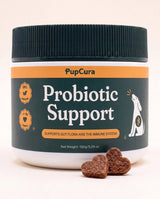
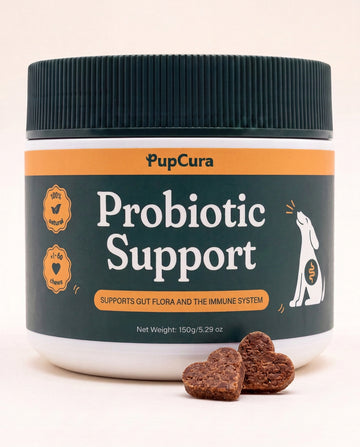
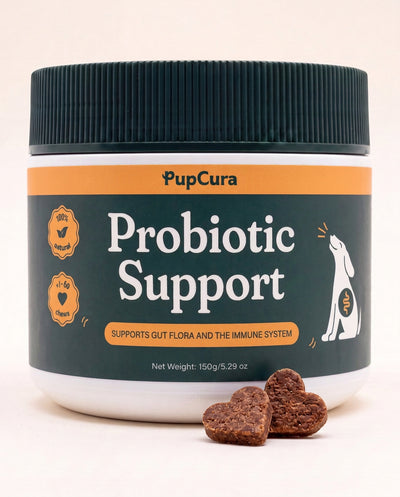
Our Probiotic Support Chews are made for exactly this moment: five probiotic strains plus pumpkin and chicory root, in one chew a day that dogs actually want to eat. Start after the last antibiotic dose, and you're covered by our 365-day money-back guarantee.